
Today's digital applications.
Many digital applications that we use every day are based on web technology—they run in a browser, are immediately available, and are independent of the operating system. For companies, web apps offer the opportunity to provide flexible, scalable, and low-maintenance digital services. This article discusses what web apps are, what advantages they offer, and what to look out for when developing them.
What are web apps?
Definition
Web apps—i.e., web-based applications—are software solutions that run entirely in the browser. Unlike traditional desktop programs, they do not need to be installed on the end device; the entire logic and user interface are provided by a server via the internet.
Features
A key feature is its platform independence: whether laptop, tablet, or smartphone, Windows, macOS, or Linux—any device with an up-to-date browser can use the application immediately. Updates are also straightforward because the software is hosted centrally. When the operator installs new features or bug fixes, they are immediately available to all users without anyone having to manually install a new version.
In addition, web apps are often more cost-effective than native applications. Developers do not have to create and maintain the software separately for each platform, but only maintain one code base. This saves resources in development, maintenance, and support—while enabling rapid, iterative improvements.
8-phase plan for developing a web app
1. Planning: Define goals, target group, and KPIs
The first step is to define the content focus: What is the app being built for, who will use it, and how can its success be measured? Clear KPIs (e.g., throughput time, error rate, conversions) will help to demonstrate its impact and ROI later on. The result of this phase is a realistic roadmap with priorities.
2. Requirements analysis: Specify functions, data, and security
The objectives give rise to specific requirements: features, data models, and a role/rights concept (RBAC). At the same time, integrations (e.g., ERP/CRM) and error cases are described. This specification serves as a common basis for design, prototyping, and development.
3. UX concept: Flows and wireframes
The user journey is outlined as a flow: Which tasks are most important, which steps are really necessary, where are the edge cases? Low-fidelity wireframes capture the structure, navigation, and information hierarchy and create clarity before visual design begins.
4. UI design: Appearance & components
The wireframes are transformed into a consistent interface: colors, typography, spacing, and a component construction kit (design system) ensure recognizability and speed of implementation. Accessibility criteria and responsive behavior are considered early on.
5. Prototyping & user feedback
A clickable prototype (e.g., in Figma) brings processes to life. Testing with real users reveals ambiguities before code is written. Based on feedback, texts, interactions, and sequences are refined—reducing the risk of costly iterations later in the project.
6. Development: front end, back end, and APIs
The front end (visible interface) and back end (server logic, database) are developed in parallel based on clear API contracts. Interfaces are tested using tools such as Postman to ensure that all parts work together seamlessly. Short iterations deliver usable increments on a regular basis.
7. Quality assurance: Testing & performance
Automated unit, integration, and end-to-end tests ensure functionality and interaction. In addition, performance (including Core Web Vitals) is measured to optimize loading time and stability. Security checks (AuthN/AuthZ, common OWASP risks) complement QA.
8. Deployment & operation: Go-live, protection & further development
The rollout is automated via CI/CD in the cloud. HTTPS ensures encrypted transmission, and a web application firewall (WAF) reduces vulnerabilities. Once live, operations begin: logs and monitoring detect errors early on, and requests from everyday use are continuously incorporated into new releases.
Advantages of custom web app development
Adaptability and flexibility
One of the greatest advantages of customized web app development is its ability to be tailored precisely to a company's processes and goals. Instead of relying on generic standard solutions, individual functions can be integrated that precisely meet industry-specific requirements – from specialized reporting modules to complex interfaces for internal systems. At the same time, a clean architecture provides the necessary scalability: as the company grows, new users, modules, or processes can be added without any problems, without having to rethink the application from scratch. This ensures that the web app remains flexible, powerful, and permanently tailored to your needs.
Improving the user experience
A carefully designed web app significantly enhances the user experience. By taking the needs and preferences of the target audience into account from the outset, developers can create an application that is intuitive and easy to understand without lengthy training. This requires a consistently user-centered design: regular testing with real users and immediate feedback are incorporated into each iteration so that operating procedures, wording, and visual hierarchy meet expectations exactly. Equally important is a responsive layout that adapts flexibly to different devices and screen sizes – from large desktop monitors to smartphones. This ensures that the web app remains easy to read and use everywhere, providing a consistent, satisfying user experience.
Cost efficiency
Although the development costs of a customized web app are often higher than those of a standard solution at the outset, this investment pays off significantly in the long term: because the application is specifically tailored to your processes, many workarounds and unnecessary additional modules are eliminated, making maintenance and updates leaner, more predictable, and therefore more cost-effective. At the same time, efficiency in daily use increases—automated processes shorten processing times, and optimized user guidance reduces support costs. This not only saves you money over the lifetime of the app, but also gives you back valuable resources and freedom to act.

Trends in web app development
Artificial intelligence and machine learning
The integration of artificial intelligence (AI) and machine learning into web apps is a growing trend because it enables companies to create personalized experiences and facilitate data-driven decisions.
AI makes it possible to automatically tailor content and recommendations to individual user behavior. For example, the application displays exactly the products, articles, or features that are most likely to interest the respective user—based on click patterns, dwell time, or previous purchases.
Machine learning, in turn, can automate recurring tasks and make processes significantly more efficient. This includes, for example, the automatic categorization of user requests, the prediction of server load peaks, or the detection of fraud patterns in real time, freeing up time for developers and operators to focus on more strategic tasks.
Progressive Web Apps (PWAs)
Progressive web apps (PWAs) combine the strengths of traditional websites with the look and feel of native mobile applications: users simply access them in their browser, but experience performance that is almost like that of an app. Thanks to so-called service workers, PWAs even offer offline functionality and remain fully or partially usable even without an internet connection – a noticeable plus for user satisfaction. At the same time, consistent performance optimization and lean resources mean that they load particularly quickly, so that content is available within fractions of a second and interaction remains fluid.
Cloud-based solutions
The use of modern cloud technologies makes web apps more flexible and scalable: the application no longer runs on a single local server, but uses distributed computing resources that can be dynamically adjusted. This has two key advantages: first, accessibility increases because employees and customers can access the app from anywhere and at any time via a browser – ideal for cross-location collaboration and high productivity. Second, the cloud's pay-as-you-go model ensures true cost efficiency: Companies only book the resources they currently need and automatically scale up or down as required without having to invest in expensive hardware.
Choosing the right agency for web application development
Criteria for selection
Choosing the right agency lays the foundation for the success of your web app. A key factor is the experience and expertise of the team: make sure that the agency has already implemented several web apps and is proficient in common frameworks and modern technologies. This is the only way to quickly implement individual requirements and easily make adjustments later on.
A look at the portfolio will reveal whether the agency has already handled similar projects. Use the references provided to check how complex the implemented applications were, which functionalities (e.g., user authentication, database connections, or real-time features) were incorporated, and whether the design is appealing and user-friendly. This will give you a feel for whether the style and technical approach match your expectations.
Finally, customer reviews and testimonials provide valuable insights into the agency's working methods and communication. Read reviews from previous clients to find out how reliably deadlines were met, how transparent the billing process was, and how good the support was after the project was completed. Satisfied customers indicate that you are working with a trustworthy company in terms of both the quality of the results and the service provided.
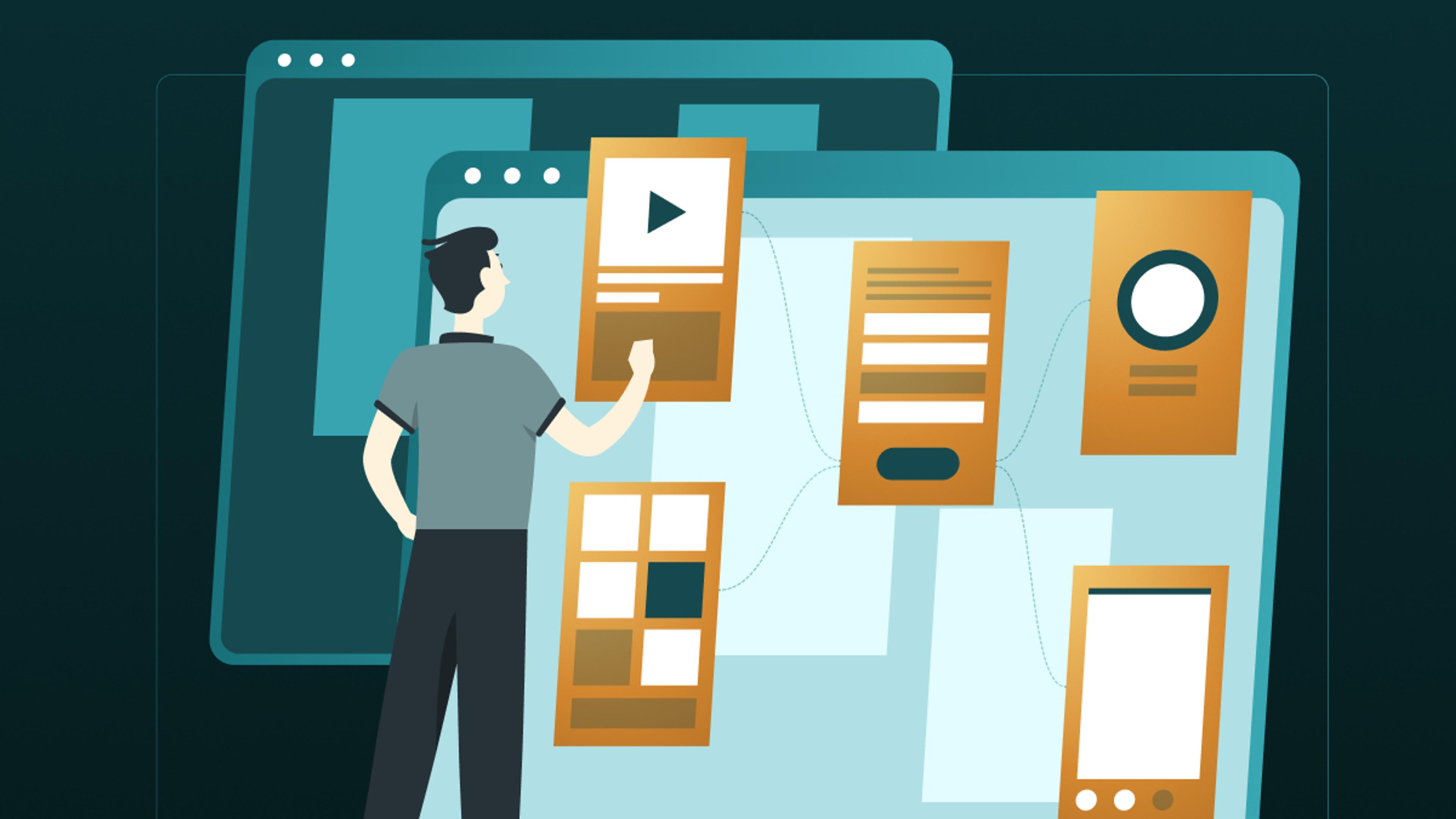
B2B web app vs. normal web app – the most important differences
In terms of content
B2B web apps are designed for companies and help to manage complex workflows. This means that employees in companies or partner firms use them to manage orders, write invoices, or maintain inventories, for example. Well-known examples are Salesforce and SAP Fiori. Normal web apps are intended for private individuals and have simpler functions. A blog CMS or a simple chat tool, on the other hand, usually only display content or offer simple forms, for example, to send messages.
Security
When it comes to security, B2B web apps often have different user roles, logs that record who did what, and often a central login (single sign-on). They are also often linked to other programs, such as a CRM system (customer database), warehouse management system, or invoicing software. Normal web apps usually only use a simple login with standard encryption and mostly work independently, without major external connections to other systems.
Conclusion
Web app development is a crucial factor for companies that want to increase their efficiency and adapt to constantly changing market conditions. Customized web applications offer numerous advantages, including adaptability, improved user experience, and cost efficiency. With current trends such as artificial intelligence, PWAs, and cloud technologies, the future of web app development looks even more promising.
Choosing the right agency for development is crucial to ensuring that your custom web app meets the specific needs of your business. By considering the criteria above and the development process, you can make an informed decision and lay the foundation for your web app's success.
In a world where digital solutions are becoming increasingly important, investing in a customized web app is a strategic decision that can pay off in the long term.