
Successful web presence
A successful website is not a rigid project, but a living system that needs to be continuously maintained and developed. This is the only way it can offer long-term security, visibility and a convincing user experience.
Updating your website regularly not only shows activity, but also strengthens the trust of potential customers. Content that is relevant and well maintained signals professionalism - just like fast loading times, intuitive navigation and up-to-date security standards. At the same time, search engines such as Google reward ongoing maintenance with better rankings, which ensures greater reach and organic traffic.
Why is website maintenance important?
Website maintenance is not limited to the occasional addition of text or images. It includes all measures necessary to keep information up to date, eliminate technical errors and constantly improve the overall experience for visitors. If this process is neglected, the site will quickly appear outdated, important functions may fail and potential customers will lose confidence.
Topicality and relevance
Regular updates ensure that your content is always up to date: Product data, price lists, opening hours or blog posts reflect current developments. Content can also be completely changed or revised. Visitors immediately recognize that your company is active and takes care of its online presence. This freshness strengthens the brand image and increases the likelihood that users will stay longer and return.
Security and trust
All software - from content management systems to plugins - requires continuous updates to close security gaps. Those who apply patches immediately significantly reduce the risk of hacker attacks. A secure website signals professionalism and protects sensitive user data, which builds trust and prevents legal disputes.
SEO benefits through continuous maintenance
Search engines prefer sites that are technically clean, fast and up-to-date. A well-maintained website with optimized meta data, compressed images and error-free code is more likely to rank at the top of the search results. Continuous maintenance therefore not only improves the ranking, but also increases organic traffic at the same time.
Optimized user experience
A well-maintained website loads faster, navigates more smoothly and works seamlessly on all devices. Regular performance checks and usability tests ensure that menus, forms and interactive elements remain intuitive. The result is a positive user experience that motivates visitors to stay longer, view more pages and ultimately convert.

The role of a user-friendly CMS
Intuitive user interface
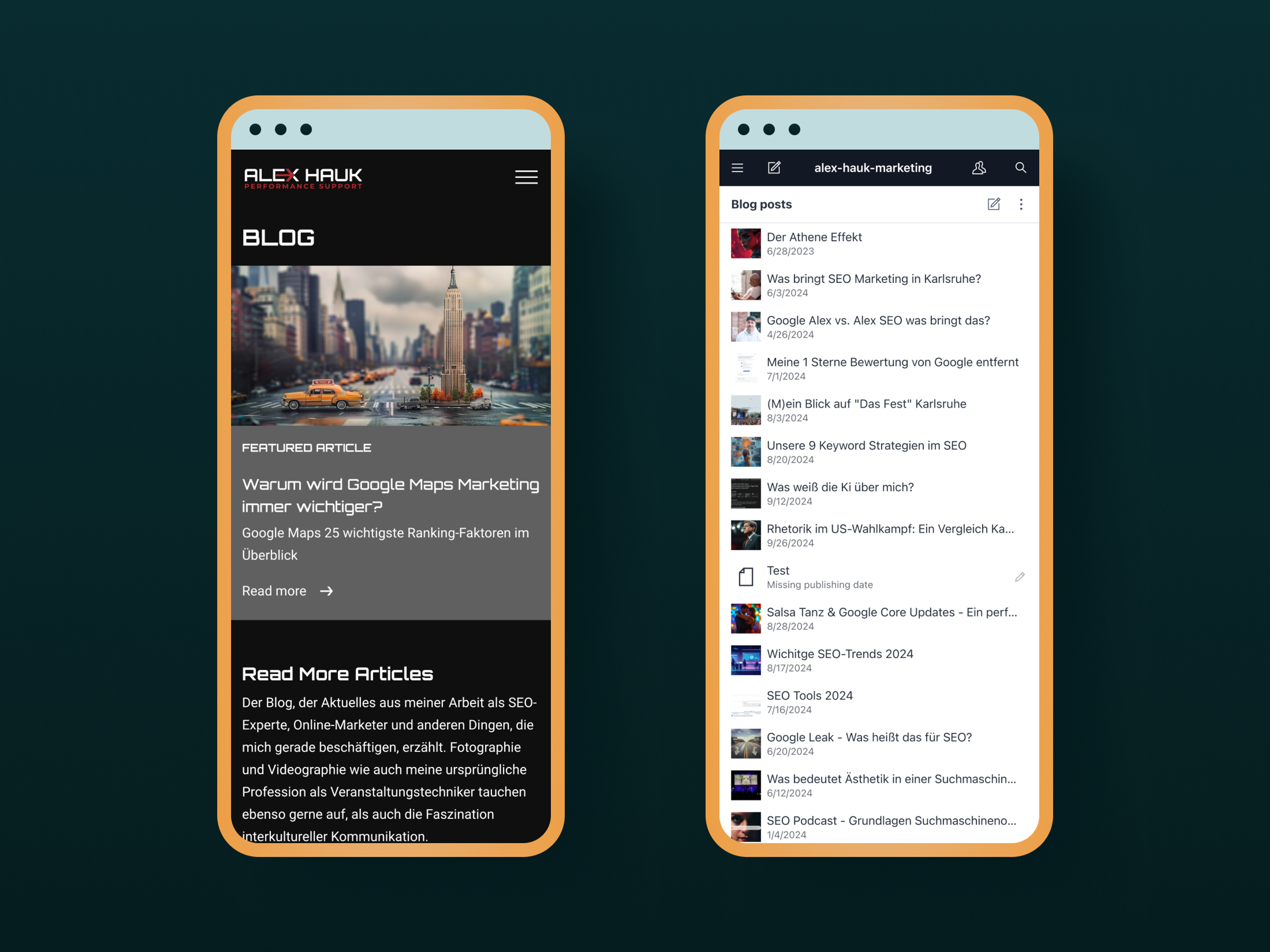
A content management system (CMS) is the heart of every website. It allows you to easily manage content without the need for in-depth technical knowledge. When choosing an agency, it is important that they have experience with user-friendly CMS solutions.
At its heart is an easy-to-use dashboard: clear menus, self-explanatory icons and a visual page editor allow editors to create content via drag-and-drop, maintain metadata or add SEO information. This allows employees to spend their time on productive tasks instead of poring over long manuals or making enquiries to IT.
Flexibility & security as a stable basis
A good CMS must be able to grow. Customizable templates allow you to adapt the appearance of your website exactly to your brand identity without the need for programming knowledge. At the same time, plugins and extension modules ensure that new functions - such as multilingualism, event calendars or e-commerce elements - can be integrated at any time. This modular architecture prevents expensive complete relaunches and makes your online presence future-proof in the long term.
As traffic increases, so do the requirements for protection and speed. A modern CMS offers regular security updates, granularly adjustable user rights and automatic backups to prevent data loss. At the same time, integrated caching mechanisms and image compression optimize loading times so that visitors - regardless of their device - enjoy a smooth experience and search engines rank your pages higher.
What characterizes good website content?
Relevance - content that immediately convinces your target group
Visitors only stay on a page if they find answers to their specific questions there. Relevant content therefore addresses the typical problems, wishes and buying motives of the target group. By targeting texts, graphics and videos exactly where information is needed, trust is created: Users feel understood, spend more time on the site and are more likely to return. This in turn reduces the bounce rate and strengthens brand loyalty.
Structure & readability - clearly structured, easy to grasp
Even high-quality content misses its mark if it remains hidden in endless blocks of text. A clear structure with descriptive headings, short paragraphs and bulleted lists allows visitors to scan the content and dive into specific details. Visual elements such as info boxes or icons emphasize central statements, while well thought-out internal links provide a common thread throughout the page. Search engines reward this reader-friendliness with better rankings because they can easily read the information hierarchy.
Up-to-dateness & maintenance - the digital presence always stays fresh
Information becomes outdated quickly: prices change, product details are added, legal requirements are adapted. Regular maintenance ensures that all information remains correct, incorrect links are removed and security updates are installed. Search engines prefer websites that are continuously updated and users are more likely to trust content that reflects the latest developments. A structured editorial plan and automatic monitoring tools help to identify new topic opportunities and publish them in good time - keeping the website relevant, secure and visible in the long term.
Why continuous website maintenance is crucial
A website will only remain secure and visible in search results if it is treated as a running process. Security and system updates should not be postponed to fixed calendar days, but should be installed immediately as soon as manufacturers make critical patches available. Modern content management systems make it possible to automatically detect such updates so that security gaps can be closed after just a few hours. At the same time, the content part of the site needs constant patience: instead of making major revisions at long intervals, it is worth adding new articles, references or product data at short intervals - ideally weekly, but at least monthly. Search engines interpret this continuous movement as a sign that your offer is actively maintained and reward it with better rankings. At the same time, titles, meta descriptions and internal links can be gradually optimized with each small update, which also boosts the ranking. Technical performance indicators such as loading time and core web vitals should also not be checked only after noticeable losses; regular, automated performance checks reveal whether new images are too large or a script is delaying the page load. In short: security requires an immediate response to patches, SEO benefits from constant fresh content, and technology requires ongoing fine-tuning. If you see website maintenance as an ongoing task rather than a major quarterly project, you will end up with a site that is reliable, trustworthy and permanently at the forefront.
Tip: The all-round carefree package
An agency that takes care of design and development as well as ongoing updates, security checks and content maintenance automatically keeps your website up to date - so you can relax and concentrate on your core business.
What a convincing homepage absolutely needs
Clear value proposition
A web design agency positions the value proposition of a brand in the visible entry area of the homepage. There, the team condenses the benefits of an offer into a single, concise sentence and supplements it with an easily recognizable option for action. This structure serves less as an advertising slogan than as an orientation aid: visitors should immediately understand what solution the company offers and for whom it is intended - without having to click through additional menus.
Current core content
The agency presents the most important services or topics in compact teasers directly below the entry point. The aim is to create a content map on which different user groups can immediately find what they are looking for. Continuous maintenance ensures that product descriptions, blog posts or event information reflect the actual status of the offer and thus convey the impression of a lively, reliable source.
Signals of trust
In order to document credibility to the outside world, the agency integrates logos of established partners, seals of approval or quantifiable key figures in prominent places. Authentic customer testimonials and case studies are also embedded in the layout. This evidence is not primarily used for self-praise, but for risk management from the perspective of new visitors: those who see proof of quality in black and white are more likely to make decisions with confidence.
Easy to find contact options
Professional agencies ensure that contact channels are not a search task. The form, chat widget or telephone number are positioned in such a way that they remain within reach on all end devices. This permanent visibility shortens the distance between initial interest and a concrete inquiry - an important quality feature for service orientation.
Clean structure and fast loading times
In order for content to be effective at all, the agency pays attention to a clearly structured layout with meaningful headings, logical paragraphs and supporting graphics. At the same time, the development team optimizes images, scripts and server settings. The goal: short loading times and a stable presentation that has a positive impact on both user satisfaction and search engine ratings.
The result is an interplay of precise content, technical efficiency and confidence-building elements - the basis for a website that informs and convinces visitors and invites them to take the next step.
Conclusion
A website is not a one-off project, but a permanent communication and marketing tool. Those who invest regularly - in technology, content and user experience - ensure long-term visibility, strengthen their brand and remain relevant in a competitive environment. Maintenance pays off not only through better rankings, but also through a trustworthy and professional appearance.