
Why web design costs are more than just numbers
Anyone who deals with web design will sooner or later encounter one of the most important questions: How much does a website cost? The answer is more complex than it seems at first glance. This is because web design costs are made up of many factors: design, technology, content, strategy, and service. If you only look for the cheapest price, you risk ending up with a website that costs little but also delivers little. In this article, we show you what a professional website really costs, how prices are calculated, and what you should look for when choosing your agency. The aim is to help you with your commercial research so that you can develop a realistic budget for individual solutions that will pay off in the long term.
Understanding and planning web design costs
Estimate costs realistically
Web design costs can vary greatly. A simple one-page website can cost a few hundred euros, while a complex corporate website can quickly run into five figures. The exact cost of your website depends on various factors: How many subpages should there be? What features do you need (e.g., forms, shop, newsletter connection)? And how customized should the design be? The more technical and design requirements you have, the higher the price will be. The content management system (CMS)—such as WordPress or TYPO3—also influences the cost.
What influences the total amount?
Some agencies charge a flat rate, others charge by the hour. In any case, a quote should always be transparent and comprehensible. Ask specifically what services are included, how the prices are calculated, and what can be booked as an option. This is the only way to obtain a reliable basis for your decision.

Below, we show you the most important factors that influence the price of a website:
Concept & Strategy
The concept forms the foundation of every professional website. In this phase, goals are defined, target groups are analyzed, and the page structure is planned. A well-thought-out strategy saves time and money later on—and ensures that the website contributes to your business goals.
Design
An appealing design not only ensures a professional first impression, but also helps users find their way around and builds trust. This includes layout, color choice, typography, and user guidance. Good web design is always functional too—it combines aesthetics with user-friendliness (UX/UI).
Programming
Programming implements the design technically. Depending on the complexity of the site, this can involve simple front-end development or individual functions in the back-end. Clean code quality, fast loading times, and optimization for all devices (responsive design) are important here.
Copywriting
Professional content is crucial to the success of a website. Texts should be clear, target group-oriented, and search engine optimized. Good texts increase the length of stay, improve findability on Google, and increase the conversion rate.
SEO basics
Basic SEO measures should be integrated right from the start when creating a website. These include a clean page structure, descriptive URLs, meta tags, alt text for images, and fast loading times. This is the only way to ensure that the website will be found by search engines.
Technical support
Even after launch, a website needs maintenance. This includes regular updates, security checks, backups, and minor adjustments. Reliable technical support protects against downtime and ensures long-term stability.
Licenses & additional costs
Additional costs may arise for certain functions or visual content, such as premium plugins, professional images, or font licenses. These items should be clearly stated in the quote to avoid unpleasant surprises.
Cost comparison of different providers
Website creation costs in comparison
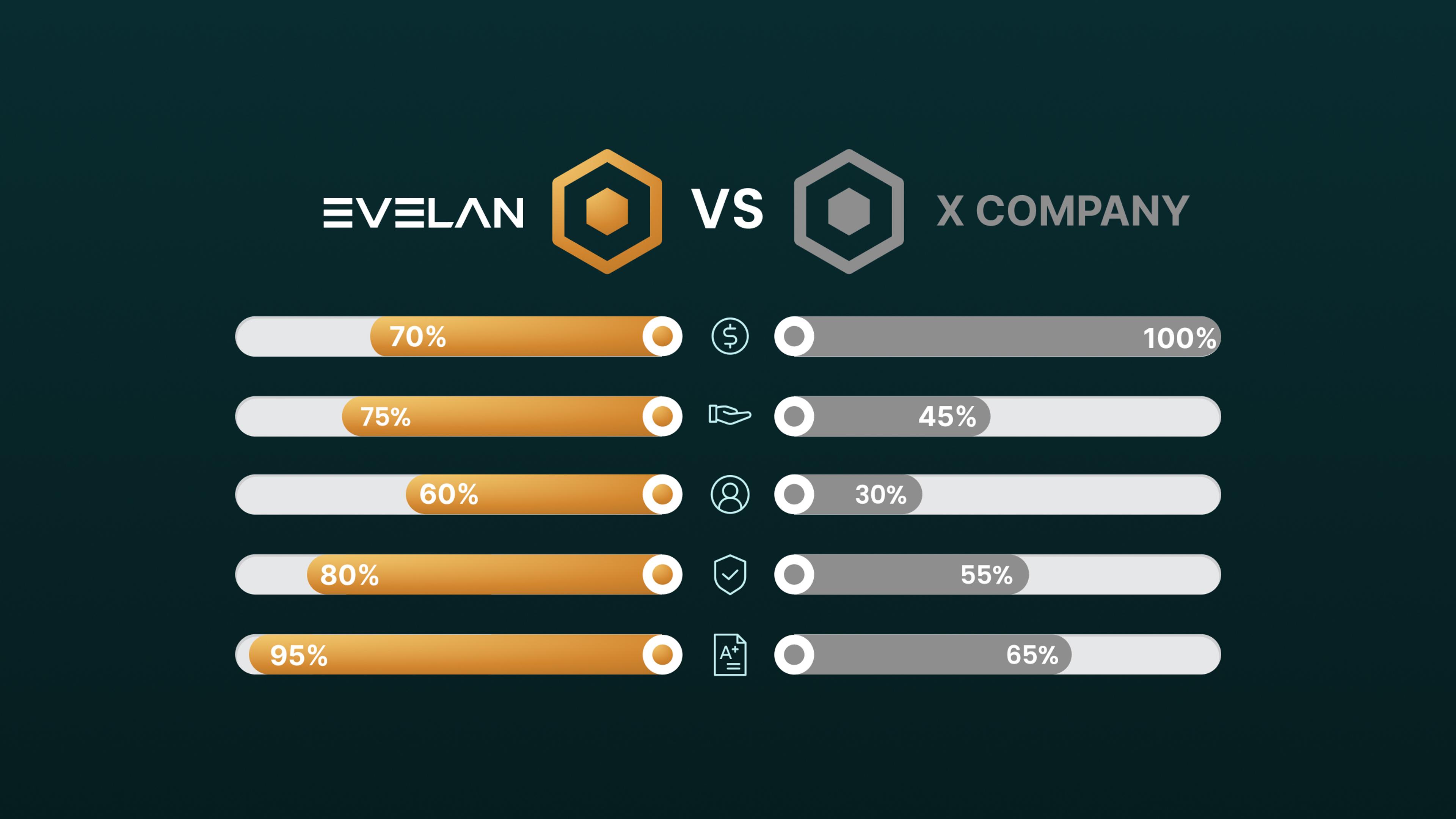
The cost of creating a website varies greatly depending on whether you use an agency, a freelancer, or a website builder.
Modular systems
Systems such as Wix or Jimdo may seem inexpensive and easy to use at first glance, but in practice they often prove disappointing. The design options are very limited, many functions cannot be customized, and the technical quality is hardly sufficient for professional requirements. In addition, such websites often look "off-the-shelf" and do not convey a serious impression—which can deter potential customers.
Freelancers
Freelancers usually offer more customized solutions than construction kits and are often cheaper than agencies, but they quickly reach their limits. They often lack the capacity for larger projects, comprehensive technical expertise, or long-term support. Especially if you need changes, extensions, or a consistent brand strategy later on, many freelancers are overwhelmed in terms of personnel and organization—or simply unavailable.
Agencies
Website agencies offer the most professional and sustainable solution in comparison. Here you get a tailor-made complete package consisting of strategy, design, technology, SEO, content, and support. Even if the investment is higher, it pays off through better visibility, stable technology, legal protection, and continuous development. If you really want to be successful online, you should rely on an experienced web agency.
Web design price calculation: What you should look out for
A price calculation for web design should not only include the direct project costs, but also take into account ongoing costs such as hosting, maintenance, and updates. Future expansions or adjustments should also be planned for. Pay attention to whether training for website maintenance is included and how support services are regulated. Good providers create a transparent calculation that focuses not only on the price but also on the expected results: What will the website bring you in terms of visibility, inquiries, or sales?
Factors in price calculation
Good planning is essential for calculating web design costs realistically. Starting without a clear concept risks inaccurate quotes, unnecessary additional costs, and subsequent delays. Only with clear objectives, structured content, and a defined project architecture can you see what effort and budget are really necessary. The following steps help to create precisely this clarity: help to create precisely this clarity:
Step 1: Defining your goals
The first step is to clearly define what you want your new website to achieve. Do you want to attract new customers, increase brand awareness, or present your services digitally? Your goals will serve as a compass for all further decisions in the project—from design to technology.
Step 2: Target group analysis
Carefully analyze who will be using your website. Create target group profiles or so-called personas. This allows you to tailor content, tone, and functions specifically to the needs of your users—which increases user satisfaction and conversion rates in the long term.
Step 3: Competitive analysis
Get an overview of your digital competitors. What content, designs, and features are other companies using? Make a note of what works well—but also where there are gaps. This will give you valuable insights for your own positioning.
Step 4: Content planning
Make a list of all the content that should appear on your website. Think about pages such as the home page, services, about us, contact—and also plan for media content such as images, videos, or downloads. This will prevent additional work later on due to missing content.
Step 5: Define the range of functions
Define as early as possible which technical functions your website should include. For example, do you need contact forms, a product catalog, appointment booking, or a customer login? A clear scope of functions helps agencies to realistically estimate the effort and costs involved.
Step 6: Set a budget
Consider the financial scope of your project. Plan not only for implementation, but also for ongoing costs such as hosting, maintenance, and license fees. A transparent budget prevents bottlenecks later on and makes it easier to select a quote.
Step 7: Selecting the agency or service provider
Compare different providers carefully. Check references, hold discussions, and ensure communication is transparent. A good feeling during initial contact and clear offers are often a reliable indication of a successful collaboration.
Step 8: Create a schedule
Create a rough timeline for your project with fixed milestones. Determine when briefings will take place, when drafts will be available, or when the website will go live. This will keep the project manageable and allow everyone involved to stay on track.
Costs of a website relaunch
A website relaunch involves a comprehensive overhaul of an existing site—in terms of technology, design, and content. It becomes necessary when the site appears outdated, performs poorly on mobile devices, or no longer fits the brand. The cost of a relaunch depends heavily on its scope: depending on whether only the design is being modernized or whether content, structure, technology, and functions are also being revised, the effort involved varies significantly.
The most important cost factors include strategic planning, content migration and revision, technical implementation, search engine optimization, and legal adjustments. Post-relaunch support—such as training or assistance—should also be taken into account. It is crucial that the offer is transparent and clearly shows which services are included. A professional relaunch is an investment in a powerful, future-proof website—and thus in the digital success of a company.
Conclusion
Professional web design costs money, but it also brings in money. Anyone who sees web design costs as merely an expense fails to recognize the potential of a well-designed website. Today, it is often the first point of contact with potential customers and determines trust, interest, and interaction in a matter of seconds. A customized website that functions flawlessly, looks great, and is tailored to your target audience directly contributes to your brand image and your company's success. That's why it's worth looking not only for the cheapest offer, but for the best solution for your goals.